
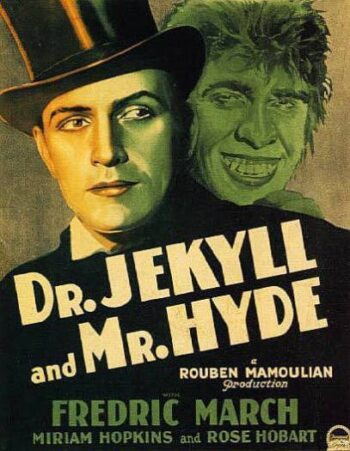
Dr. Jekyll & Mr. Hyde (1931) Review
Panel’s Chamber of Chills #5

Before Universal made the monsters household names, Paramount took a swing with Dr. Jekyll & Mr. Hyde (1931) — and nailed it. Brice B. finally checks out this forgotten classic that beat Dracula and Frankenstein at the box office but somehow slipped into the shadows.

After Universal had big hits with Dracula and Frankenstein back in 1931, Paramount decided to jump in the monster game too. Dr. Jekyll & Mr. Hyde came out that December and ended up being a monster hit, actually beating both Dracula and Frankenstein at the box office. This was a remake of Paramount’s earlier silent version with John Barrymore, and they’d do another remake ten years later with Spencer Tracy.
Now, I got a confession to make. I’d never seen this movie before doing this review. For some reason it never shows up on TV like the Universal movies do, which is a shame, because in a lot of ways it’s the better film. Paramount was making fancier pictures than Universal back then, and you can tell right away.
This one was directed by Rouben Mamoulian, and the guy knew what he was doing. It’s got the best mix of theater and early talkie style I’ve seen. There are some shots that are just incredible for 1931. The opening scene is shot completely in first-person, which is wild for that era. The transformation scenes are also way ahead of their time. The movie has this weird glow to it though—like you’re watching through foggy glasses. Not sure if that was a choice or just the film aging badly. Parts of it look a little rough and grainy now, which might be why it doesn’t get shown as often. Still, it’s put together really well, maybe even better than what Universal was doing at the same time.

The Players
Fredric March plays both Jekyll and Hyde, and man, he’s good. He really sells the split between the two sides. The transformation scenes work so well because of his facial acting. You can see the evil creeping in. March won the Oscar for this role, and honestly, he earned it.
The rest of the cast is just okay. Nobody really stands out much. That might be one reason the Universal stuff lasted longer—those movies were full of memorable side characters and actors who became legends.

The Story
Everyone knows the story of Jekyll and Hyde by now, so there aren’t many surprises here. But back in 1931, this was the first talking version, so it probably felt fresh at the time. Like Dracula and Frankenstein, it’s clearly adapted from a stage play, but this one feels smoother and more natural. It doesn’t feel boxed in by the set the way those other two do.
It’s a real shame this film doesn’t get talked about with the same respect as the Universal classics, because honestly, it belongs there. Dracula, Frankenstein, and Jekyll & Hyde all came out the same year, which is insane when you think about it. Three movies that basically created modern horror in one year. Paramount just didn’t keep this one preserved as well, which is too bad, because it deserves more love.
If you’re a fan of classic horror, this is a must-see.
Final Verdict: 3.5 out of 5 tombstones.
Images: © Paramount Pictures / Public domain stills via Wikimedia Commons. Used here under fair use for review and commentary.